
Radio Frequency (RF) technology lies at the center of today’s connected world, from smartphones and satellite communications, to radar technology as well as IoT devices. As wireless systems get more complicated with higher frequency operation, creating and testing them with traditional physical prototypes is no longer viable. This is when RF simulators and technologies come in providing engineers with a quicker and more economical, as well as highly precise method to design modern solutions.
Understanding RF Simulation
The term “RF simulation” refers to the use of specially-designed software to analyze, model and predict the behaviour of electromagnetic signals and fields in a variety of situations. These tools let engineers see the way RF components, such as antennas amplifiers, filters, and transmission lines — will function before they are built. Through simulation of real-world situations, designers can pinpoint problems earlier in the process of developing and adjust their designs accordingly.
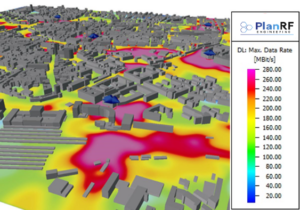
One of the major benefits for RF simulation is its capacity to cut down on design cycles. Instead of creating several prototypes and then testing in a laboratory engineers can conduct WinProp RF propagation simulation and adjust in real-time. This is not just time-saving but also drastically reduces expenses associated with the materials used and tests.
Key Technologies Behind RF Simulation
At the heart to RF simulation tools are sophisticated computational techniques, such as those used in the Finite Element Method (FEM), Method of Moments (MoM) and Finite Difference Time Domain (FDTD). These mathematical models assist in solving complicated electromagnetic equations and provide precise insights into the behavior of RF signals in various conditions.
Atoll RF predictive modeling simulation systems also incorporate with computers-aided design (CAD) instruments, which allows effortless transitions of design from analysis to. This integration allows engineers can evaluate their designs in the same environment, thereby increasing efficiency while reducing errors. Furthermore, a lot of tools utilize clouds and high-performance computers (HPC) to manage massive simulations that require substantial processing power locally.
Machine learning and artificial intelligence are now playing an increasingly important an important role within RF simulation. These tools can analyze huge databases, improve designs automatically and forecast performance outcomes with greater precision. In the end, engineers will achieve higher quality outcomes with fewer manual interventions.
Applications Across Industries
These tools are employed in a variety of industries. In telecommunications, they’re crucial in designing antennas and maximizing coverage for 5G, 4G and the upcoming 6G technology. In the defense and aerospace industries, RF simulation is used to design electronic warfare solutions, as well as satellite communications systems.
Automotive industry gains also from Computer-aided RF simulation services, especially due to the increasing use of autonomous and connected automobiles. Engineers employ these tools to develop and test communication systems for vehicles to ensure reliability in a variety of environments. Similar to the field of healthcare, RF simulation plays a crucial role in the development of medical devices, such as MRI systems as well as devices for wireless monitors.
Challenges and Future Trends
Although it has many advantages, RF simulation is not free of challenges. High-frequency simulations are complex and require considerable skills to interpret results with accuracy. In addition, getting an exact alignment between simulation and actual performance may be difficult due to environmental factors and material variations.
But it is clear that the next phase of RF simulation appears promising. The advancements in computing power, together with the introduction of AI-driven optimization make these tools more accessible and effective. Digital twins, which are virtual replicas of physical systems — is predicted to change the way RF systems are built and maintained.
PlanRF’s RF-related planning services include developing and calibrating propagation protocols for wireless communication networks in order to guarantee uninterrupted coverage, efficient capacity and reliable connectivity across different industries and environments.